Security is integrated into systems, processes, and applications from the outset. Instead of retrofitting protective measures, IT security is a fundamental part of the architecture. This creates stable, secure, and future-proof digital work environments.
Everything is going digital - work too
The world of work has changed radically. Not just since home office and hybrid models – but at the latest since a new generation conquered the job market. Digital natives are the ones with smartphones, cloud and Collaboration Tools grew up. For them, it's a given to work anytime and from anywhere, share information in seconds, and communicate in real-time.
This is why companies must rethink their IT infrastructures. Monolithic systems are increasingly giving way to modular architectures, microservices, and scalable Cloud solutions.

What many companies still refer to as „transformation“ is already the norm in modern, digital work environments.
A modern workplace is therefore no longer a „nice-to-have“. It is a crucial competitive factor – for recruiting as well as for long-term staff retention. Companies that do not strategically consider modern working methods risk losing talent to organisations that offer flexibility, digital processes, and modern IT infrastructure.
For us, the Modern Workplace means:
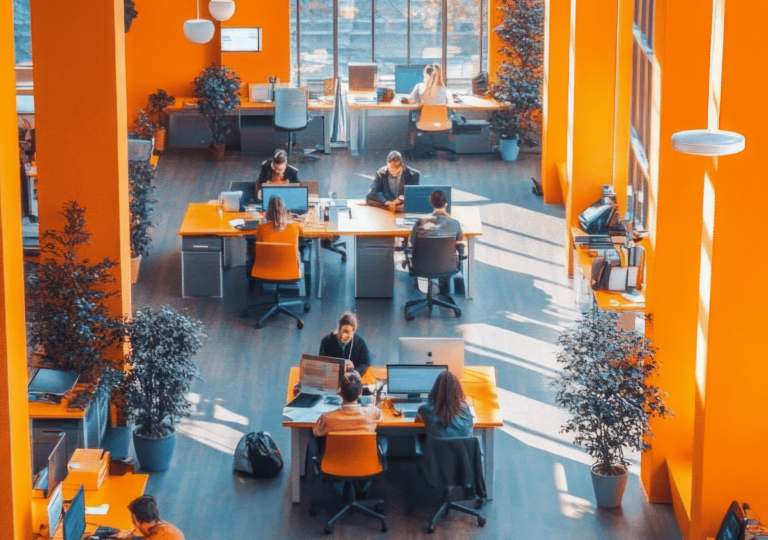
- Work independently of location and time
- Digital, secure collaboration
- Automated, efficient processes
- Cloud-based scalability
- Highest security and data protection standards
This isn't about tools for tools' sake. It's about people, processes, and company culture – and the right tools to support these meaningfully. The goal is to increase productivity, collaboration, and employee satisfaction through location-independent working.
1. WHY A MODERN WORKPLACE CAN BE DECISIVE
The labour market has turned.
- Shortage of skilled workers is worsening
- Digital natives expect flexibility
- Remote and hybrid models are standard
- Work-life integration is becoming more important than rigid working hours.
Businesses today face two central questions:
- How do we win the right talent?
- How do we keep them in the company long-term?
The answer doesn't just lie in the salary – but in the working environment.
Adolescent generations – digital natives with clear expectations
The younger generations
- grew up with cloud services and mobile apps
- expect intuitive tools instead of complex IT landscapes
- communicate digitally, collaboratively and quickly
- place importance on transparency and feedback
- expect modern leadership and digital processes
When internal IT structures feel like they’re from the 2000s, it breeds frustration. And frustration leads to staff turnover. A Modern Workplace is therefore a strategic tool for employer attractiveness.
2. WHAT DOES "MODERN WORKPLACE" MEAN IN CONCRETE TERMS?
A Modern Workplace combines:
Home office, hybrid working models or fully remote – modern workplaces offer maximum flexibility without compromising on stability or security. Employees can access applications, data and communication platforms from anywhere, while remaining seamlessly connected to their team.
Modern collaboration tools enable efficient teamwork across locations and time zones. Real-time communication, collaborative document editing, and transparent project structures ensure that teams can share information quickly, make decisions faster, and advance projects efficiently.
Future-proof IT is increasingly based on cloud technologies. Instead of rigid on-premise systems, cloud solutions offer a scalable, flexible infrastructure that adapts to the company's requirements. Resources can be used as needed, while maintenance, updates, and security are managed centrally.
Automated processes reduce manual tasks and create more scope for value-adding activities. Standardised workflows, digital approval processes and self-service solutions increase efficiency, reduce sources of error and ensure faster processes in everyday work.
3. Our Toolkit for Modern Working
We do not see tools as an end in themselves. They are instruments for solving concrete business challenges.
Collaboration & Communication
- Microsoft 365 – The foundation for modern working
- Microsoft Teams – Digital turntable for communication & collaboration
- SharePoint Online – Structured information and document platform
These solutions enable:
- Real-time collaborative document editing
- Structured Knowledge Platforms
- Transparent project work
- Location-independent communication
But what is crucial is not the introduction of the tools – but their strategic integration into existing processes.
Cloud & Infrastructure
Our hybrid cloudConnecting strategies
- Existing systems
- Scalable cloud resources
- Flexible access options
Advantages
- Future-proofing
- Scalability
- Performance optimisation
- Location independence
Cybersecurity and Data Protection – The Foundation of the Modern Workplace
The more flexible working is, the higher the demands on security. A modern workplace means:
Every access is checked – regardless of location or device. With the Zero Trust approach, no user, system or network is automatically trusted. Instead, identity, permissions and security status are continuously verified for every access. This ensures that only authorised persons can access company data and applications – whether in the office, at home, or on the go.
Additional security layers protect sensitive data and corporate access. In addition to the password, a further confirmation is required, for example via an app, a code, or biometric data. Even if login details fall into the wrong hands, access to systems and applications remains protected.
All end devices such as laptops, smartphones and tablets are centrally managed and secured. Security policies, updates and access rights can be controlled uniformly, ensuring that devices always meet the latest security standards – regardless of where they are used.
Cloud solutions must be not only powerful but also legally compliant. A data protection-compliant architecture ensures that company and customer data are processed and protected according to the requirements of the GDPR and other regulatory demands.
Technological security measures are only part of the solution. Continuous security monitoring helps to identify and respond to threats early on. At the same time, regular training strengthens employees' security awareness – because informed handling of digital risks is a central component of modern IT security.

4. OUR SERVICES FOR THE MODERN WORKPLACE
We provide end-to-end support for companies.
Analyse and Strategy
- Maturity analysis of the existing IT
- Modern Workplace Roadmap
- Target image definition
Implementation
- Introduction of Microsoft Environments
- Cloud Migration
- Hybrid Cloud Architecture
- Security Concepts
Operation & Optimisation
- Managed Services
- Security Monitoring
- Continuous improvement
5. THE MODERN WORKPLACE IS CULTURE – NOT JUST TECHNOLOGY
The biggest challenge is rarely the technology. It's the change in mindset:
- Trust instead of control
- Focus on results instead of presenteeism
- Transparency instead of silo mentality
- Digital literacy as a core competency
This culture is crucial, especially for Gen Z. They seek meaning, co-creation, and digital fluency.
Companies that understand this will:
- More attractive to young talent
- More efficient in their processes
- More resilient to market changes
- Innovative
Conclusion
Modern working isn't a trend – it's a strategic imperative.
Anyone investing in a Modern Workplace today isn't primarily investing in software. They are investing in:
- Future viability
- Employee satisfaction
- Employer attractiveness
- Safety
- Competitiveness
The tools are available. The crucial thing is to use them wisely.
- And that's exactly what we support.