
ERP systems
Efficient Resource Planning and Workflow Automation
Related topics
An ERP solution or ERP system is software used for planning and managing a company's resources. The term ERP stands for Enterprise Resource Planning. In an ERP system, data from all central business processes, such as purchasing, sales, finance and accounting, production, and human resources, are bundled and stored in a central database.
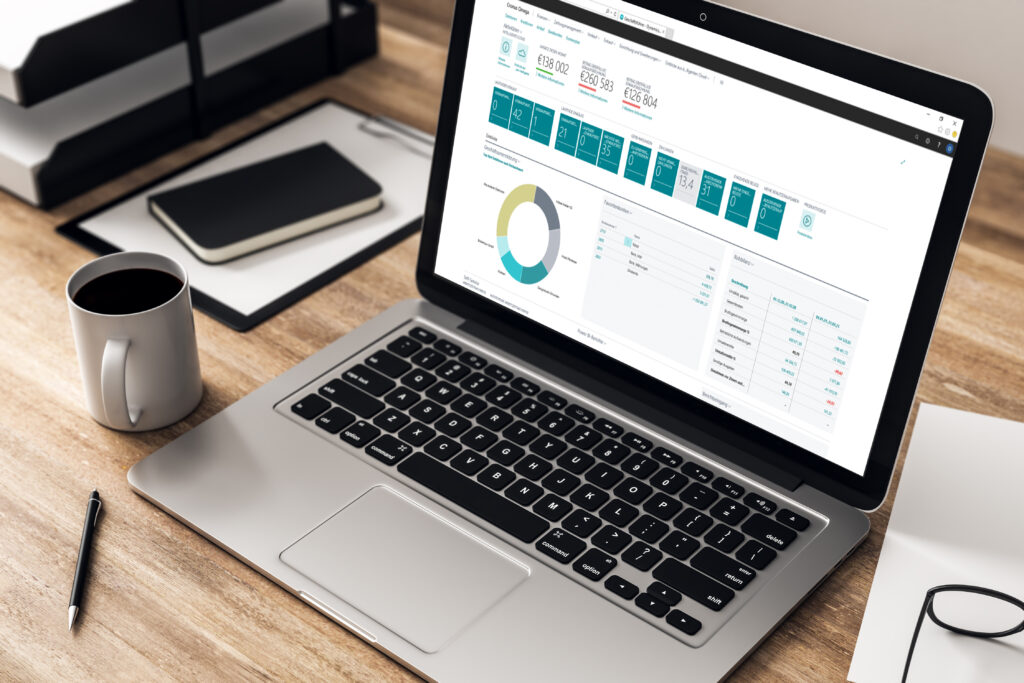
A modern ERP system connects all core business processes within a single solution. This creates transparency, automates workflows and frees up valuable time for your core business.
What does an ERP solution bring?
ERP solutions for medium-sized businesses offer a multitude of advantages. Centralised data management increases transparency, avoids isolated solutions, and improves collaboration between departments. Medium-sized companies also benefit significantly from increased productivity and time savings, achieved through the more efficient processes of an ERP system for SMEs. In particular, uniform and consistent data storage, as well as the ability to automate workflows, help to reduce errors in daily operations.
- Central Data Management
- Process optimisation
- Overview of all figures, data, and processes
- Optimised information flow within the company
- Cost reduction
- Time saving
- Improve collaboration
ERP SYSTEMS AS A FOUNDATION FOR SUSTAINABLE GROWTH IN THE MID-MARKET
As small and medium-sized enterprises (SMEs) grow, so does the complexity of their processes. An ERP system for SMEs helps to manage these Overcoming challenges and to support the company during growth. This way, small and medium-sized enterprises can always maintain their Overview of your data and processes. Scalable ERP software that adapts to the growth of the company and can therefore also meet future challenges is particularly advantageous.
Im Vergleich zu Unternehmen, die noch veraltete Warenwirtschaftssysteme oder ausschließlich Excel-Listen nutzen, kann ein modernes ERP-System für KMU einen
Im Vergleich zu Unternehmen, die noch veraltete Warenwirtschaftssysteme oder ausschliesslich Excel-Listen verwenden, kann ein modernes ERP-System für KMU einen crucial competitive advantage Offer.
The improved predictability of resources through ERP software gives SMEs a more comprehensive overview of inventory, orders, and deliveries, enabling them to react more quickly and flexibly to customer requests. This allows for shorter delivery times, more proactive purchasing, and always maintaining their Delivery capability ensured become.
A new ERP software for SMEs offers numerous advantages through more efficient processes. The Optimisations benefit all departments fundamentally, particularly those directly involved in resource planning and management. Sales can provide customers with immediate information on delivery times and quickly create quotes, while purchasing can place orders proactively to ensure the availability of products and raw materials. At the same time, logistics enables early planning of personnel deployment.
When to decide on a modern ERP system?
Inconsistent data due to maintenance in multiple systems (isolated solutions)
Internal departmental silo knowledge due to decentralised data management
Significant employee time spent on the procurement and compilation of information.
Recurring tasks that are not automated require an unnecessary amount of time.
Employees cannot provide precise information about availability
Increased communication effort within departments due to a lack of central data
Insufficient overview of recent customer activities
Strategic decisions are made more difficult by unclear data.
Slow and inflexible responses to customer inquiries
Many processes, such as warehouse management, are still analogue and have to be entered manually into the system
Poor overview of orders, inventory, and deliveries
High IT effort for managing multiple systems
navconsulting GmbH is a 100 %subsidiary of bitformer GmbH and specialises in ERP solutions for Microsoft Dynamics 365 Business Central. The team supports companies with the digitalisation and optimisation of their business processes – from consulting to individual system development.